Dog Training Software Built Around How Trainers Actually Work
Your trainer's brain, in software. One training core — skills, homework, video, and methodology packs — runs board-and-train, day training, private lessons, group classes, and virtual coaching without forcing any of them into the others' shape.
See How It Works
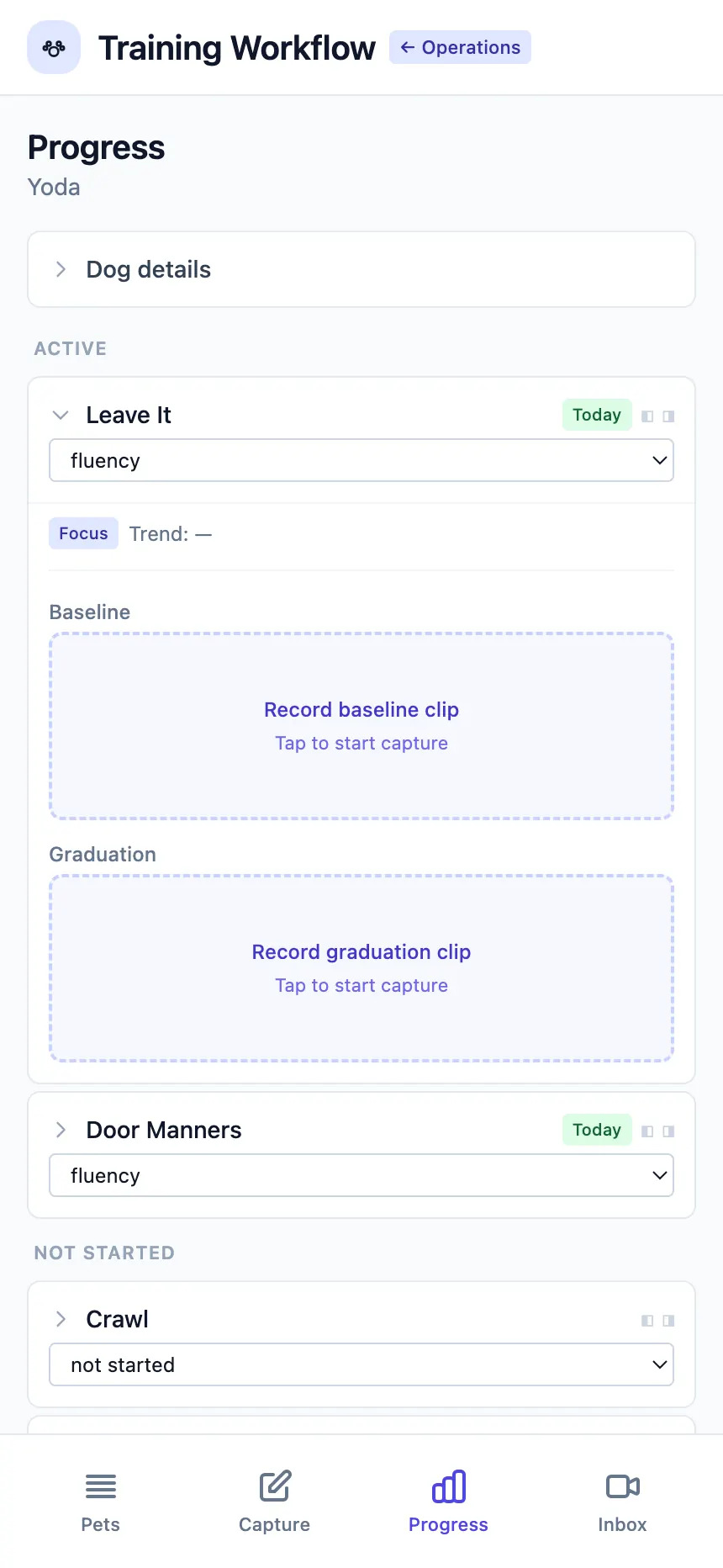
A full walkthrough video is coming. Until then, here is what a trainer sees mid-program: skill stages and homework, staying with the dog no matter which delivery model taught them.
One Training Core, Five Ways to Sell It
Board-and-train, day training, private lessons, group classes, and virtual coaching are different products with different calendars, different pricing, and different owner expectations. Underneath, they run on the same skill library, homework loop, and progress history — so a dog that starts in puppy class and graduates into board-and-train keeps its record instead of starting over.
Board-and-Train →
Long-stay, immersive programs with daily session logs and owner updates.
Day Training →
Drop-off programs where the dog goes home nightly and enrollment stays open.
Private Lessons →
Owner-proposed scheduling with staff confirmation and reschedule tracking.
Group Classes →
Cohort-based curriculum with capacity, portal registration, and roster tools.
Virtual Coaching →
A homework and practice-video loop for remote clients — no facility required.
The Progress Model
Every skill on Pet Ops moves through the same lifecycle, built on the 3 Ds — distance, duration, and distraction — instead of a single pass/fail checkbox. A cue is introduced, a marker confirms the rep, criteria tighten as the dog gets more reliable, and the skill graduates from a first exposure to fluent generalization across new places and new distractions.
That history travels with the dog, not the program. A recall taught in a private lesson shows up in the same skill record if that dog later enrolls in group class or comes back for a board-and-train stay — one training core, not five disconnected logs.
Your Method, Not Ours
Pet Ops doesn't assume a methodology. Methodology packs change which fields a trainer sees — Neutral, Balanced, and Science-Based ship seeded, and a program with its own vocabulary can build a custom pack in the admin UI, no code required. It is the qualification-gate question most trainers ask first, so we answer it up front instead of burying it in a features list.
What the Owner Sees
Owners get a magic-link into the portal, not a login they have to remember. Report cards are shaped around the delivery model that taught the dog: skill stages for board-and-train and classes, published session notes, homework and practice logs for virtual coaching, and attendance for group cohorts.
Evidence, Not Adjectives
Record a session on the phone already in a trainer's pocket. Pet Ops transcribes it and drafts skill notes and clip suggestions from the footage — the trainer decides what publishes to the owner. Nothing goes out unreviewed, and owners see clips and a before-and-after, not raw session video.
Who It's For
The training core was built inside a real facility, but a facility is not a requirement to use it. Four kinds of programs run on Pet Ops today:
Board-and-Train Facilities →
Full facility operations alongside long-stay training documentation
Group Class and Day-Training Businesses →
Cohorts, curricula, and a daily drop-off loop with roster tools
Behavior Consultants →
Case management and behavior logs for high-touch private work
Solo and Home-Based Trainers →
The same training core, with no facility, kennel run, or front desk required
Related Reading
Run Every Training Program on One Core
Pet Ops is built inside a real training facility and proven across board-and-train, classes, day training, private lessons, and virtual coaching.
Start Free